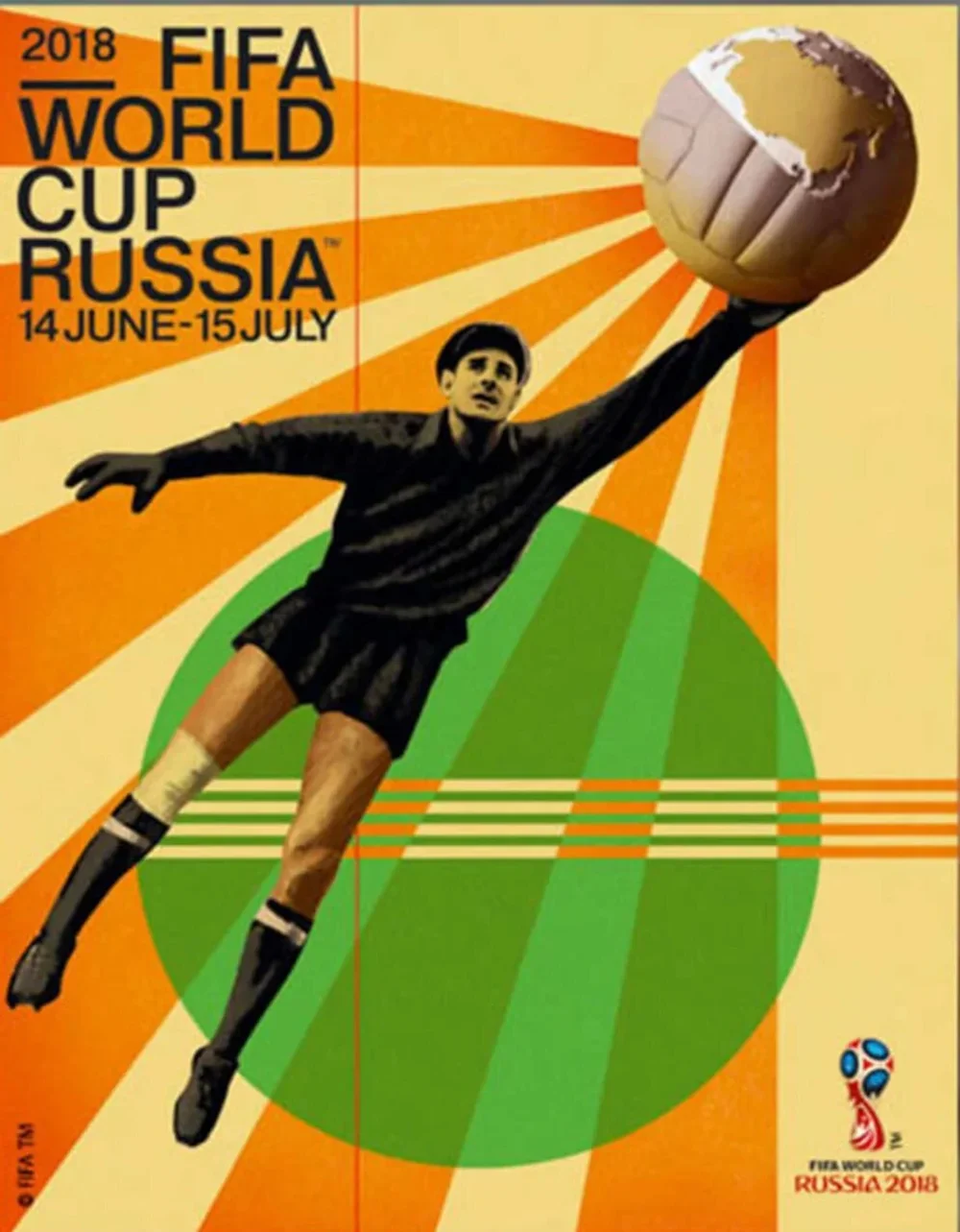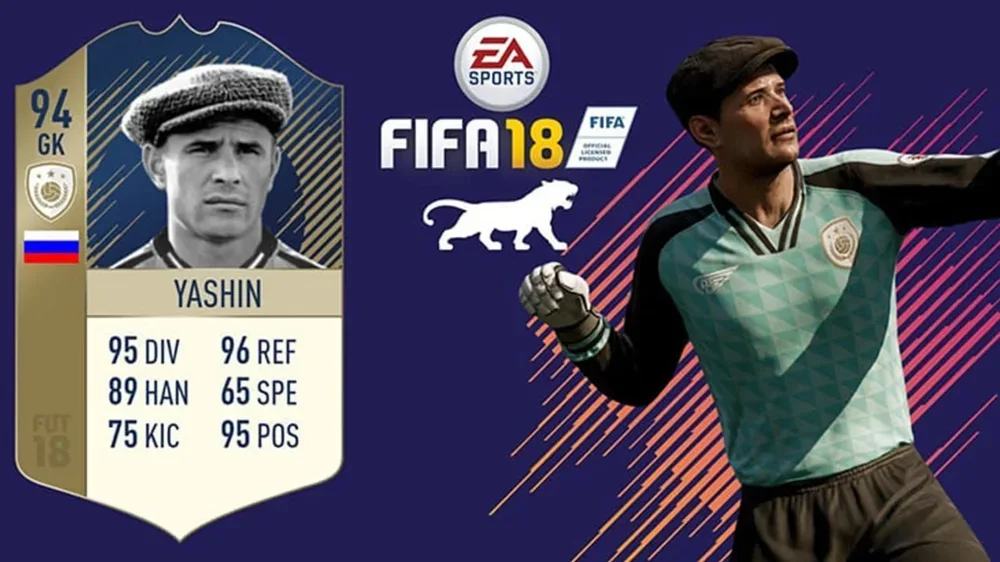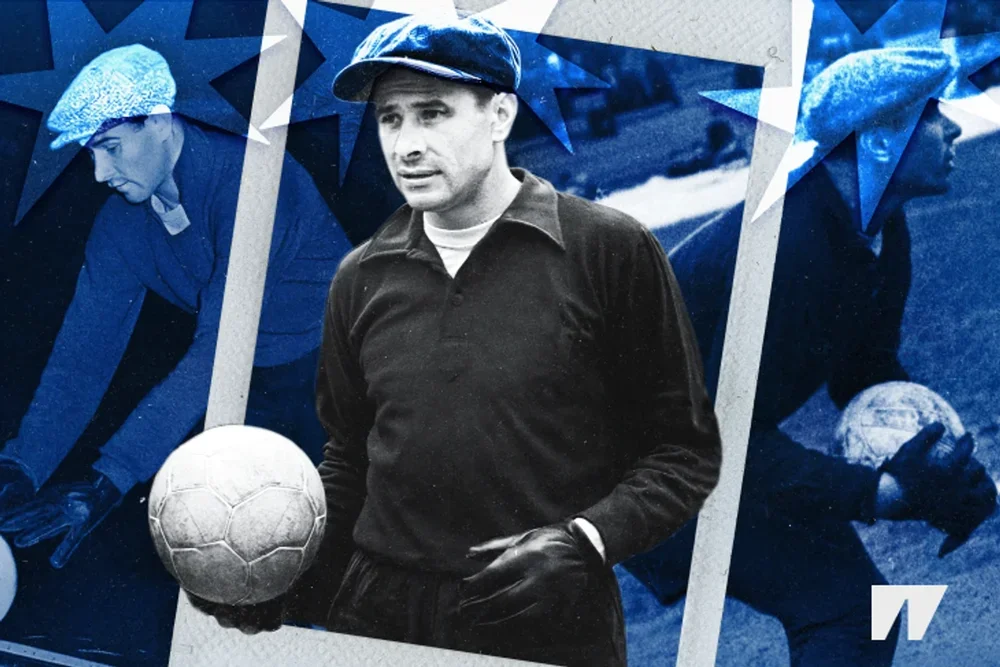

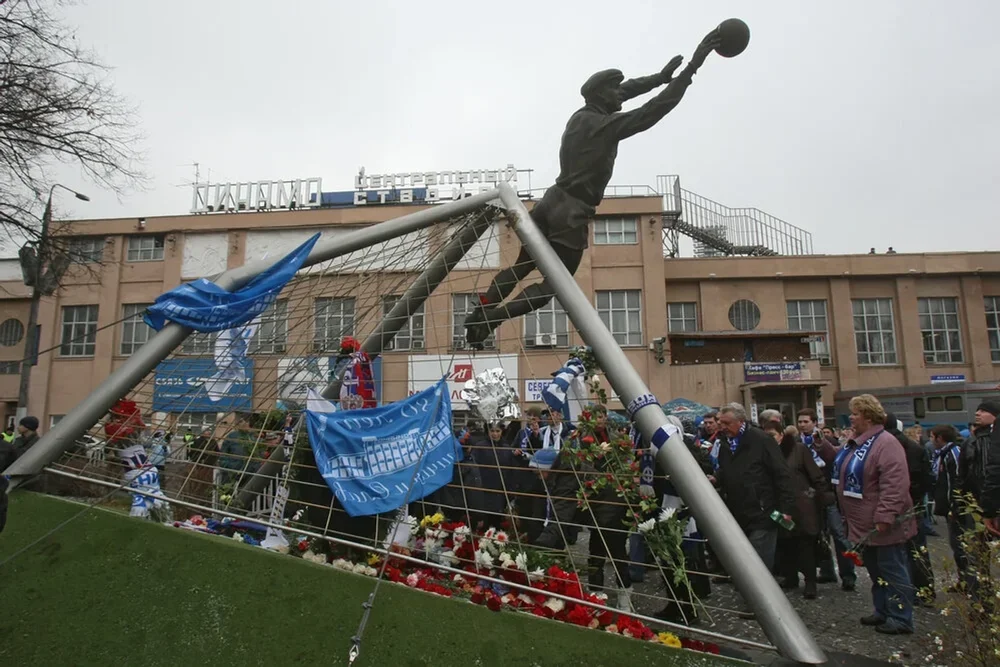
Lev Yashin and his iconic cap are inseparable in popular imagination. The image of the legendary goalkeeper in dark sweater and shorts, making a spectacular save with his cap firmly in place, is etched into football history. It symbolizes an era when the Soviet Union won the 1956 Olympics and the 1960 European Championship. The cap appears on Yashin’s statue, on the official poster of the 2018 World Cup, and even in FIFA video games. But where did the cap come from, and did he really wear it in every match?
Yashin himself recalled in an interview that the cap was a gift from friends in Czechoslovakia during Dynamo Moscow’s 1953 tour. “The gift appealed to me, becoming not just a headwear but a kind of talisman,” he said. Beyond superstition, the cap served a practical purpose. Oleg Ivanov, Yashin’s understudy at Dynamo, explained to Moskovsky Komsomolets: “Lev Ivanovich started wearing a cap to shield his eyes from the sun. The pitch at the old Dynamo stadium was incorrectly aligned, causing the sun to shine directly into goalkeepers’ eyes at certain times. The cap’s brim protected against that, especially when coming out for crosses and judging the flight of the ball.”
Historian of sport Aksel Vartanyan added that many goalkeepers of the time wore caps for sun and rain protection. “Some even used them as a psychological trick during penalties: they’d take off the cap and throw it into one corner of the goal, subconsciously pressuring the kicker to aim there.” Caps were particularly popular in Georgia, made in specialized ateliers. Yashin wasn’t alone; other keepers like Leonid Ivanov (Zenit) and Mikhail Piraev (Dynamo Tbilisi, Spartak) also favored them.
Yashin’s cap became globally recognized during his peak years: the 1956 Olympics, the 1960 European Championship, and the 1958 World Cup. His grandson Vasily Frolov recalled a memorable moment from the England vs. USSR match in 1958: “Midway through the second half, Lev Ivanovich made a difficult save in a beautiful dive, the cap flew off, and he quickly put it back on after throwing the ball to a teammate.” Another highlight from that game shows Yashin far outside his box, calmly taking the ball from an English forward while wearing his cap.
A 1956 friendly against West Germany, then world champions, showcased Yashin’s charisma in front of 86,000 fans. A YouTube compilation of that game’s highlights amassed 11 million views and thousands of comments, with fans marveling at his ease and style. One commenter wrote: “How he caught the ball and adjusted his cap as if on a Sunday stroll – amazing. I wish I’d seen it live.” Another noted: “My grandfather was a huge Yashin fan and insisted I wear a cap in goal. I think it gave me bonus points for agility and reaction.”
So why did Yashin stop wearing his cap after 1960? Two versions exist. According to one, fans stole the cap after the Euro 1960 final but later returned it. Yashin recounted in a 1970 interview: “For six years I wore the cap in every game. When we won the European Cup in Paris, French fans carried us to the dressing room on their shoulders. Suddenly someone snatched the cap from my head and disappeared into the crowd. I shouted, ‘The cap, give back the cap!’ And believe it or not, they brought it back to the dressing room. But from then on, I stopped wearing it.”
However, Yashin’s wife, Valentina Timofeevna, told a different story in a 2018 interview. “Let’s debunk the myth completely. There is no cap. It was stolen in 1960 after the final match against Yugoslavia when the USSR became European champions. After the final whistle, fans flooded the pitch, and someone took the cap that Lev always left in the goal. He later said he turned around and it was gone. With the crowd, how could he find it?” When asked why he didn’t buy another, she replied, “That first one was precious to him. Look at old photos: after 1960, Lev played bareheaded.”
For instance, in the famous 1963 match where Yashin played 45 minutes for the World XI against England (future World Cup winners) and didn’t concede a goal, he was without a cap. Grandson Vasily Frolov confirmed: “Valentina Timofeevna told me the cap was never returned after the final. So after ’60 he played without headwear. At the 1962 World Cup in Chile, in the 1963 World XI match against England – he’s cap-less everywhere. I have many photos from those years without the cap.” Asked if Yashin sometimes placed the old cap behind the goal as a talisman, Frolov replied: “I never heard that from my grandmother. Lev Ivanovich wasn’t superstitious – I only know one ritual: he would go fishing before a game. And he’d smoke a cigarette right before stepping onto the pitch. Then he’d go.”
Objects hold power through the person. Yashin’s cap became a cultural symbol not just for its vintage charm or atmospheric significance. It’s because Lev Yashin was more than a goalkeeper. Every detail of his greatness – his daring runs from the goal line, his firm saves, his gear – captivates viewers even decades later. And it doesn’t matter exactly how many matches he played with that cap.